Introduction: A Major Shift in Ontario’s Alcohol Recycling System
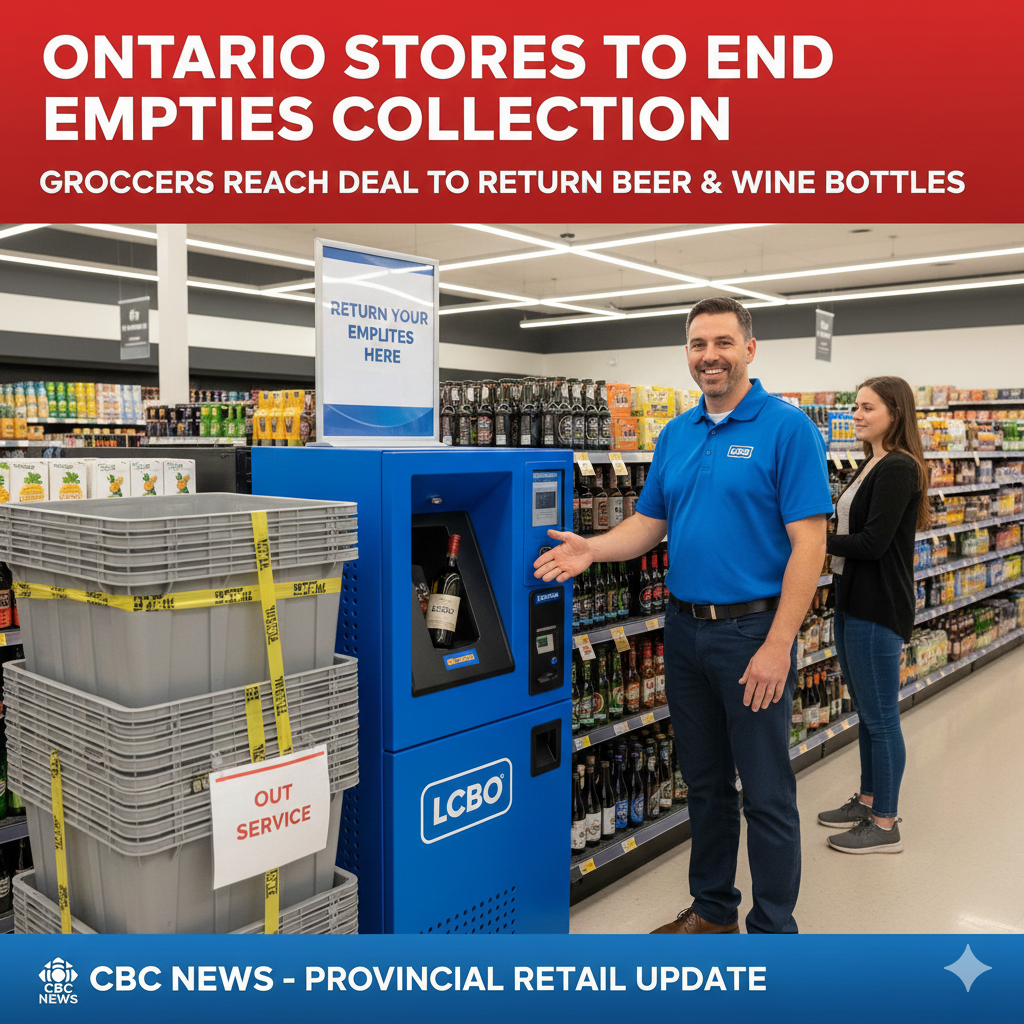
Ontario’s alcohol recycling landscape is set for a significant transformation following a new agreement-in-principle between provincial grocers and The Beer Store. The deal, confirmed through sources familiar with the negotiations, will allow grocery retailers to avoid collecting empty beer and wine containers at their stores, instead reinforcing The Beer Store’s role as the primary return point for alcohol empties across the province.
The agreement provides clarity after months of uncertainty that threatened to disrupt the Ontario Deposit Return Program, a cornerstone of the province’s recycling system. Under current regulations, grocery stores selling alcohol were expected to begin accepting empty containers starting January 1. However, mounting operational challenges prompted strong resistance from retailers, many of whom indicated they would abandon alcohol sales entirely rather than take on the added responsibility.
This new arrangement delivers a compromise that protects both environmental goals and business operations, while ensuring consumers retain access to a familiar and reliable deposit return process.
How the New Deal Will Work for Consumers
Empties to Be Returned at Beer Store Locations
Under the proposed framework, consumers will continue returning empty alcohol containers to Beer Store locations in order to collect their deposit refunds. Rather than shifting collection duties to grocery stores, the agreement keeps the system centralized through the existing Beer Store network, which has long managed container recycling in Ontario.
Grocers, however, will bear the financial responsibility for the empties that are returned through The Beer Store system. This cost-sharing model allows grocery retailers to continue selling beer and wine without having to manage the physical handling, storage, and sanitation challenges associated with container returns.
Additionally, brewers have committed to ensuring that a return facility remains accessible within 10 kilometres for the vast majority of Ontario residents, safeguarding convenience for consumers regardless of location.
Avoiding a Crisis in the Deposit Return Program
Grocers Had Warned of Alcohol Sales Withdrawal
The agreement effectively prevents what some feared could have been a major collapse of the deposit return program. Several grocery chains had publicly stated they would refuse to accept empty containers and would even relinquish their alcohol licences if the issue was not resolved.
The concern was particularly acute as January 1 also marked the date when The Beer Store is permitted to close an unlimited number of its locations under a prior government agreement. Without intervention, this double pressure risked leaving consumers with few accessible return options and undermining years of recycling infrastructure.
By reaffirming The Beer Store’s function in alcohol container returns, the deal provides stability and continuity to a system that Ontarians have relied on for decades.
Government Involvement and Policy Modernization
Facilitated Negotiations and Strategic Oversight
The breakthrough came after months of behind-the-scenes discussions between brewers and grocers, facilitated by the provincial government. These talks were closely linked to Premier Doug Ford’s broader initiative to modernize and expand alcohol sales into convenience and additional grocery stores across Ontario.
A spokesperson for Finance Minister Peter Bethlenfalvy praised the agreement, describing it as a balanced solution that benefits both businesses and consumers. According to the province, the deal aligns with its goal of transforming Ontario’s alcohol marketplace to offer greater accessibility and convenience while maintaining responsible recycling practices.
Government officials emphasized that the agreement allows retailers to focus on serving customers without being burdened by operational obstacles that could have deterred participation in the alcohol sales market.
Financial Implications and Industry Response
Cost Responsibilities Shift to Grocers
While the finer financial details have yet to be finalized, early indications suggest that grocery stores will be required to cover the cost of empty containers returned through Beer Store locations. The total expense to retailers remains unclear, and it is uncertain whether these costs will eventually be passed on to consumers.
Industry groups acknowledge that some level of cost was unavoidable. Had grocers been forced to implement in-store recycling systems, many would have faced significant startup expenses, including infrastructure modifications, staff training, and ongoing waste management processes.
Grocers Welcome the Resolution
Retail organizations have responded positively to the agreement. The Retail Council of Canada described the outcome as a practical solution that keeps the recycling system familiar and dependable for consumers while reducing pressure on grocery retailers.
Industry representatives noted that the arrangement preserves a simple, recognized process that customers have come to trust, minimizing confusion and disruption.
Independent Grocers and Small Business Relief
Preventing Market Exit by Smaller Retailers
Independent and small-scale grocers were among the most vocal critics of the original recycling requirement. Many argued that the cost and space demands of collecting empties would have been unmanageable, potentially forcing them to abandon alcohol sales altogether.
Gary Sands, a senior policy advocate with the Canadian Federation of Independent Grocers, highlighted that some storeowners had already chosen not to apply for alcohol licences because of the impending rules. Others had publicly stated that continued compliance would result in their exit from the alcohol retail market.
The new deal restores confidence among these retailers, encouraging broader participation and ensuring that consumers maintain access to alcohol products in smaller and rural communities.
The Beer Store’s Renewed Role in Recycling
Maintaining a Core Environmental Function
Beer Store leadership welcomed the agreement, framing it as a win for both consumers and environmental sustainability. With decades of experience operating a deposit return system, the organization emphasized its ability to provide reliable service and efficient recycling outcomes.
The company reaffirmed its commitment to ensuring convenient location coverage and maintaining high customer service standards for Ontarians seeking to return containers and reclaim their deposits.
Although questions remain about potential store closures, the agreement suggests a continued operational footprint to meet accessibility commitments across the province.
Alcohol Expansion and Its Wider Impact
Balancing Convenience with Responsibility
The deal is closely tied to the province’s plan to expand alcohol availability in grocery and convenience stores. A previous agreement allowed The Beer Store to receive transition funding while permitting location closures and market restructuring.
While the aim is to provide broader consumer choice, the government has also recognized the importance of maintaining a strong recycling backbone. This updated agreement reinforces that the modernization of alcohol retail must occur alongside responsible environmental management.
Convenience stores remain exempt from recycling requirements, further distinguishing their role within the marketplace.
Consumer Experience Remains Unchanged
Familiar System Preserved
For most Ontarians, little will change in practical terms. Consumers will still return their empty alcohol containers to The Beer Store to receive their deposit refunds, preserving the straightforward process that has been in place for years.
This consistency eliminates confusion and avoids logistical disruptions that could have arisen from a decentralized and uneven return system across grocery stores.
Environmental and Community Considerations
Ensuring High Return Rates
Maintaining The Beer Store as the primary return point is expected to uphold high container recovery rates, which play a crucial role in reducing landfill waste and supporting sustainable packaging practices across the province.
Environmental advocates have long praised the centralized deposit model for its success in encouraging responsible consumer behaviour and minimizing environmental impact.
Conclusion: Stability Restored to Ontario’s Alcohol Recycling System
The new agreement-in-principle between Ontario grocers and The Beer Store marks a pivotal moment in the evolution of the province’s alcohol recycling framework. By allowing grocery stores to avoid direct involvement in collecting empties while reinforcing The Beer Store’s recycling mandate, the deal preserves environmental integrity, protects businesses from unnecessary operational strain, and safeguards consumer convenience.
With government support and industry cooperation, Ontario is steering toward a modernized alcohol marketplace that balances accessibility with accountability. While final details are still being refined, the agreement provides a practical and sustainable solution that ensures the province’s long-standing deposit return system remains effective, familiar, and accessible for years to come.
Leave a Reply